Why More Restaurants Are Switching from Charcoal to Electric Chargrilling in 2026
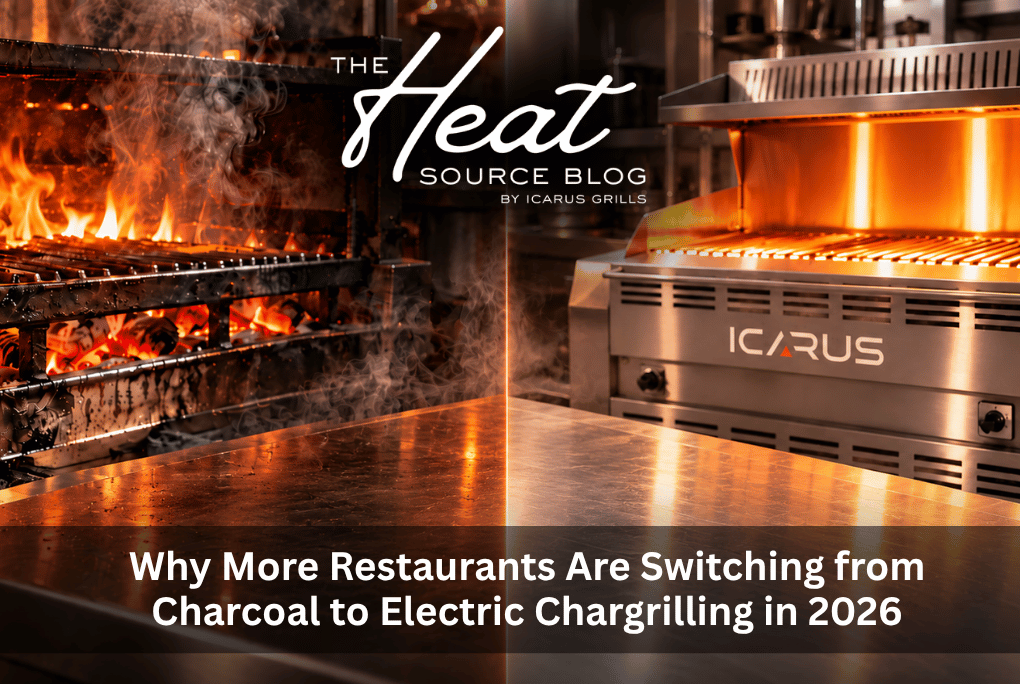
For generations, charcoal and solid-fuel grills have held an almost untouchable position in professional kitchens.
The intense heat. The unmistakable sear. The aroma. The flames. The theatre of cooking over fire. For chefs, these are all part of what makes chargrilling such a distinctive cooking method. But in 2026, the conversation is beginning to change. As restaurants, hotels and hospitality operators look more closely at energy consumption, kitchen efficiency, sustainability and the practicalities of running increasingly complex commercial kitchens, many are questioning whether charcoal is still the only way to achieve an authentic chargrilled result. At the same time, a new generation of electric chargrills is challenging the traditional perception that moving away from solid fuel inevitably means compromising on cooking performance.
And that is where Icarus comes in.
Why Are Commercial Kitchens Looking Beyond Charcoal?
There is nothing inherently wrong with charcoal. In the right environment, it remains an incredibly effective cooking medium.
But operating a charcoal or solid-fuel grill involves considerably more than simply turning on a piece of equipment.
Fuel needs to be purchased, delivered and stored. The grill needs to be lit and brought to temperature ahead of service. Fuel levels have to be managed throughout the day, and ash and spent fuel need to be dealt with afterwards.
There is also the inevitable variability associated with cooking over solid fuel.
For experienced chefs, managing that fire can be part of the attraction. For operators trying to produce consistent results across multiple chefs, shifts or locations, however, it introduces another variable into an already demanding kitchen environment.
This is one of the reasons electrification is becoming increasingly prominent within professional kitchen design. Operators are looking for equipment that can deliver the cooking characteristics chefs want while simplifying the way their kitchens operate.
But What About the Flavour?
This is probably the biggest question surrounding electric chargrilling. Can an electric grill genuinely replicate the flavour and cooking characteristics associated with charcoal?
Historically, that has been difficult. Conventional electric grills could generate heat, but often struggled to reproduce the combination of exceptionally high temperatures, intense radiant heat, searing and interaction between food fats and the heat source that chefs associate with traditional chargrilling.
Icarus was developed specifically to tackle that challenge. Rather than simply replacing a gas burner with a conventional electric element, the Icarus system has been engineered to mimic the cooking characteristics of hard-fuel grilling.
Its proprietary heat technology generates intense, penetrating heat designed to produce the searing, caramelisation and char associated with wood-fired and charcoal cooking. The system also uses a refractory hearth and specialist heating technology to create the high-temperature environment required for genuine professional chargrilling.
The result is an electric grill that has been designed around the way chefs actually want to cook — rather than expecting chefs to change their cooking style simply because the energy source has changed.
Intense Heat Without Solid Fuel
High temperature is fundamental to great chargrilling. Whether cooking steaks, burgers, vegetables, seafood or proteins, chefs need enough heat to quickly sear the outside of the product while controlling the cooking process internally.
The Icarus PRO range has been designed to provide that intense heat along with rapid recovery during busy service. The current Icarus 600 PRO and 900 PRO use specialist Icarus SGR heating elements together with an insulated refractory hearth. Icarus states that the technology provides the penetrating heat required to recreate the characteristics of wood-fired and charcoal cooking while remaining completely electric.
For a busy restaurant, that recovery is particularly important. It is one thing for a grill to reach a high temperature when empty. It is another for it to maintain and recover that heat when chefs are repeatedly loading it with cold food during the middle of a busy Saturday night service.
Greater Control and Consistency
Charcoal cooking will always have an element of variability. That is part of its appeal, but it can also create challenges. The condition of the fuel, the amount of charcoal on the grill, airflow, how long the grill has been operating and the experience of the chef managing the fire can all influence performance.
Electric technology provides the opportunity for much greater control. Icarus combines its high-temperature grilling capability with controllable heat, helping chefs create a more repeatable cooking environment.
That consistency can become particularly valuable for restaurant groups, hotels, stadiums and high-volume hospitality operations where maintaining the same cooking standards across different services — and potentially different sites — is essential.
It isn't about taking skill away from the chef. It is about giving the chef a more predictable platform on which to use that skill.
Removing the Hassle of Fuel Management
There are operational benefits too. Removing charcoal means removing the requirement to continually purchase, store and handle solid fuel.
There is no charcoal to replenish during service and no spent fuel or ash to dispose of afterwards. For operations where storage space is limited, that alone can be significant.
It also means the chargrill can become part of a wider move towards an all-electric kitchen, particularly in buildings where the use of gas or solid fuel is difficult or restricted.
Airports, developments without gas infrastructure, open kitchens and certain city-centre locations are obvious examples of environments where an electric alternative can become particularly attractive.
The Energy Question
Energy consumption is understandably under more scrutiny than ever within hospitality. Operators are looking beyond the purchase price of equipment and considering its total operating cost over its lifetime.
That means examining not only how much energy an appliance consumes, but how long it needs to operate, how efficiently it converts that energy into usable cooking heat and the wider operational costs associated with it.
Icarus has placed energy efficiency at the centre of its proposition.
For example, the Icarus 600 PRO has a stated maximum energy consumption of 8.64kW at 100% power, while the larger 900 PRO is rated at 12.96kW at maximum power. The Icarus website promotes potential energy savings of up to 70%, although the actual saving for an individual operator will naturally depend on the equipment being replaced, usage patterns and energy tariffs.
That last point is important. There is no universal percentage saving that can be applied to every restaurant. A meaningful comparison needs to look at the existing equipment, hours of operation, fuel consumption and local utility costs.
But there are already interesting real-world examples.
From Coal-Fired to Electric at The Royal Foresters
One recent Icarus installation demonstrates exactly why operators are beginning to investigate electric chargrilling. At The Royal Foresters in Ascot, an Icarus 900 PRO was installed within the venue's open kitchen to replace a traditional coal-fired oven.
The objective was not simply to install something electric. The new grill still needed to deliver the performance and visual theatre expected within an open kitchen while offering a more efficient and controllable way of cooking.
According to the Icarus case study, the venue expected utility savings of more than 70% compared with the previous coal-fired equipment while retaining the powerful grilling performance required by the kitchen. It is a useful illustration of the wider change taking place.
Electric is no longer necessarily being considered because an operator is willing to accept a compromise in return for improved efficiency. Increasingly, the challenge for equipment manufacturers is to provide both.
A Cleaner Working Environment
Removing solid fuel can also simplify the working environment. There is no charcoal dust entering the kitchen through fuel handling, no sacks of fuel being moved around the operation and no ash left behind at the end of service.
Icarus has also designed its commercial grills around straightforward cleaning and heavy-duty professional use, with stainless-steel construction and cast-iron enamel chargrill plates across the PRO models.
For chefs and kitchen teams, these seemingly small operational improvements can become significant when repeated every day. Anything that can reduce preparation, cleaning or fuel-management tasks gives teams more opportunity to concentrate on cooking and service.
Keeping the Theatre of the Chargrill
Efficiency alone will never determine what equipment a chef chooses. Food is emotional. Guests respond to the smell, sound and sight of food being cooked.
This is especially true in open kitchens where the cooking equipment itself becomes part of the restaurant experience.
That is why Icarus has focused heavily on recreating the theatre associated with traditional chargrilling. Its high-temperature technology creates the flame, searing and interaction with cooking fats that make chargrilling visually distinctive.
The intention is not to disguise the fact that Icarus is electric. It is to demonstrate that electric cooking can still be exciting.
Designed to Fit the Modern Kitchen
Flexibility is another important consideration. Not every commercial kitchen has the same layout or volume requirements, which is why the Icarus range includes different formats.
The current UK range includes the Icarus 600 PRO and 900 PRO in both bench-top and drop-in configurations, alongside the larger Icarus 1200.
Drop-in versions allow the technology to be incorporated into a wider bespoke cooking suite, while bench-top models provide a complete standalone solution.
This makes electric chargrilling relevant not only to independent restaurants but potentially to hotels, pubs, contract catering operations, stadiums and larger hospitality groups.
Is Electric Going to Replace Charcoal Completely?
Probably not — and it doesn't need to.
There will always be restaurants where cooking over traditional charcoal or wood is an integral part of the concept.
But that is no longer the only route to delivering serious chargrilled food. The more interesting question for operators in 2026 is whether they need the additional infrastructure, fuel handling and operational complexity associated with charcoal in order to achieve the end result they want.
For some kitchens, the answer will still be yes. For an increasing number, electric technology now deserves serious consideration.
The Next Generation of Chargrilling
The movement towards electric kitchens isn't simply about changing an energy source. It is driving manufacturers to rethink how traditional cooking techniques can be reproduced using new technology.
For Icarus, the challenge was straightforward but ambitious:
How do you retain the flavour, heat and theatre chefs love about charcoal while removing much of the fuel management and operational complexity that comes with it?
That thinking has resulted in an electric chargrill designed specifically for professional chefs — capable of producing intense heat, powerful searing and authentic chargrill characteristics while offering the control and convenience of electric cooking.
In other words, moving away from charcoal doesn't have to mean moving away from chargrilling. It simply means there is now another way to create it.
Experience Icarus for Yourself
Chargrilling is ultimately about taste, which is why the best way to understand Icarus is to cook on it.
Discover the Icarus Electric Chargrill range, explore the different models or arrange a demonstration and experience the heat, flavour and performance for yourself.
All the flavour. All the theatre. Without the solid fuel.